
Three Grant County Property Value Measures
Start with the label, not the number. Kentucky assesses real property at 100 percent fair cash value for property-tax purposes. It never promises a match with a later sale. Recorded consideration is evidence from one transaction, and an appraisal is a separate professional opinion for a stated date.
| Value | What It Is | Where |
|---|---|---|
| Assessed value | PVA fair-cash valuation used in the tax system | Grant County PVA roll |
| Market-value opinion | Estimate for a stated date and purpose | Qualified appraisal, not the tax portal |
| Recorded sale consideration | Amount associated with a particular conveyance | Deed and qPublic sales data |
| Land and improvement components | Parts that may compose a total assessment | PVA parcel detail when exposed |
A sale can be old, non-arm's-length, or shaped by terms no summary shows. The PVA mass-appraises thousands of parcels. It maintains the roll over time. Compare only after matching the parcel and the date. Never convert one figure type into another with an assumed formula the Grant County card does not publish.
Read Kentucky Fair-Cash Rules in Grant County
The Grant County PVA assesses real property annually at fair cash value and physically examines it on a four-year cycle. Annual assessment is not a yearly site visit. Kentucky Department of Revenue materials describe cost, sales-comparison, and income approaches applied as circumstances fit. The public figure remains a tax assessment. It is not a custom appraisal of one parcel.
Source and year still matter. A qPublic value should carry the roll year and any certification warning the application displays. The county publishes no sample value card. Read the land, improvement, total, and history labels straight from the live parcel result.
Note: Kentucky's full fair-cash standard is a tax rule, not a promise that assessment and sale price match.
Look Up a Grant County Assessed Value
The Grant County PVA qPublic application supports address, owner, parcel ID, alternate ID, and sales searches. The entry gate is routine. Pass it and go in. Match the address and parcel ID before reading any value shown for the parcel.
- Search by address, then confirm the parcel ID and situs.
- Record each displayed value label, amount, and tax year exactly.
- Open sales or deed information and note the transfer date and consideration.
- Save the source date and investigate any exemption or roll-status note.
- Assessed value
- The PVA valuation carried for property-tax administration.
- Fair cash value
- Kentucky's standard for real-property assessment.
- Assessment level
- The relationship required between assessment and fair cash value.
- Sale consideration
- The amount associated with a recorded transfer, subject to its transaction context.
- Reassessment
- An update to the valuation, distinct from a private appraisal.
Separate Grant County Land and Improvement Figures
Before a parcel record shows a total, it often splits value into land and improvements. Land is the site itself. Improvements cover structures and other assessed additions. A bare total can hide which component moved. So keep the labels exactly as the county presents them. A permit or recent construction may explain a later change on the tax roll. But it does not prove the assessor has already folded the work into the appraisal.
The Grant County building inspector issues county building permits. The office also performs wall, framing, and final inspections. Permit records add factual context about work at an address. They stay separate from the PVA's valuation judgment. A precise open-records request should name the address, parcel ID, record type, and date range under KRS 61.872.
Recorded Grant County Sales Are Evidence, Not Answers
Grant qPublic metadata includes sales search and a Yearly Sales map layer. A recorded deed can also carry the transfer date, parties, and legal description. It can also show the consideration. Kentucky valuation guidance lets a preceding-year deed price inform a later assessment under stated conditions. That relationship never makes consideration an open-market value.
Confirm the deed covers the whole parcel. Check for relatives, an estate, multiple tracts, or another unusual condition. Compare only when the official data supplies enough facts. One old price is not today's Grant County property value.
Do Not Confuse Grant County Value With Taxable Amount
Kentucky homestead or disability relief changes the amount subject to tax. It does not touch the fair-cash assessment itself. The exemption amount is $49,100 for 2025-2026, claimed on state Form 62A350. Eligibility follows the applicant and the rules. An exemption on one record is not a permanent feature of the land.
The distinction is basic. Assessed figure, exempted amount, and taxable basis may not match. A bill can reflect all three at once. For bills, payment status, exemptions, or an appeal path, use the Grant County property tax records guide. It owns those procedures.
Dates Explain Many Grant County Value Mismatches
PVA and Sheriff materials stress January 1 ownership. A deed recorded later in the year can coexist with a tax bill still naming the January 1 owner. The same timing discipline governs values. A later sale and an earlier assessment describe different moments. Write the roll year beside the assessed value. Write the transfer date beside the sale amount.
The Grant County Sheriff links current and prior tax bills through its tax portal. A bill is not a fresh appraisal. It blends the assessment with tax rates and collection status, and city taxes add another billing layer that is not the county PVA's assessment.
Note: A newer deed date can explain why a sale and the dated tax roll appear to disagree.
Grant County Aerial History Adds Visual Context
Grant County's qPublic viewer stacks aerial layers from 2024, 2019, 2018, and 2015. Flipping between years can show when a change first appeared on a parcel. That clue may narrow a permit search or a hunt through deed records. Aerials carry real limits, though. They assign no value, reveal no interior condition, and set no legal boundary. Anyone citing an image should keep its date and layer name intact.
The value-report screen requires a sign-in before parcel detail appears. The official Grant qPublic value-report entry shows that access point. It is not a worked Grant County valuation example.
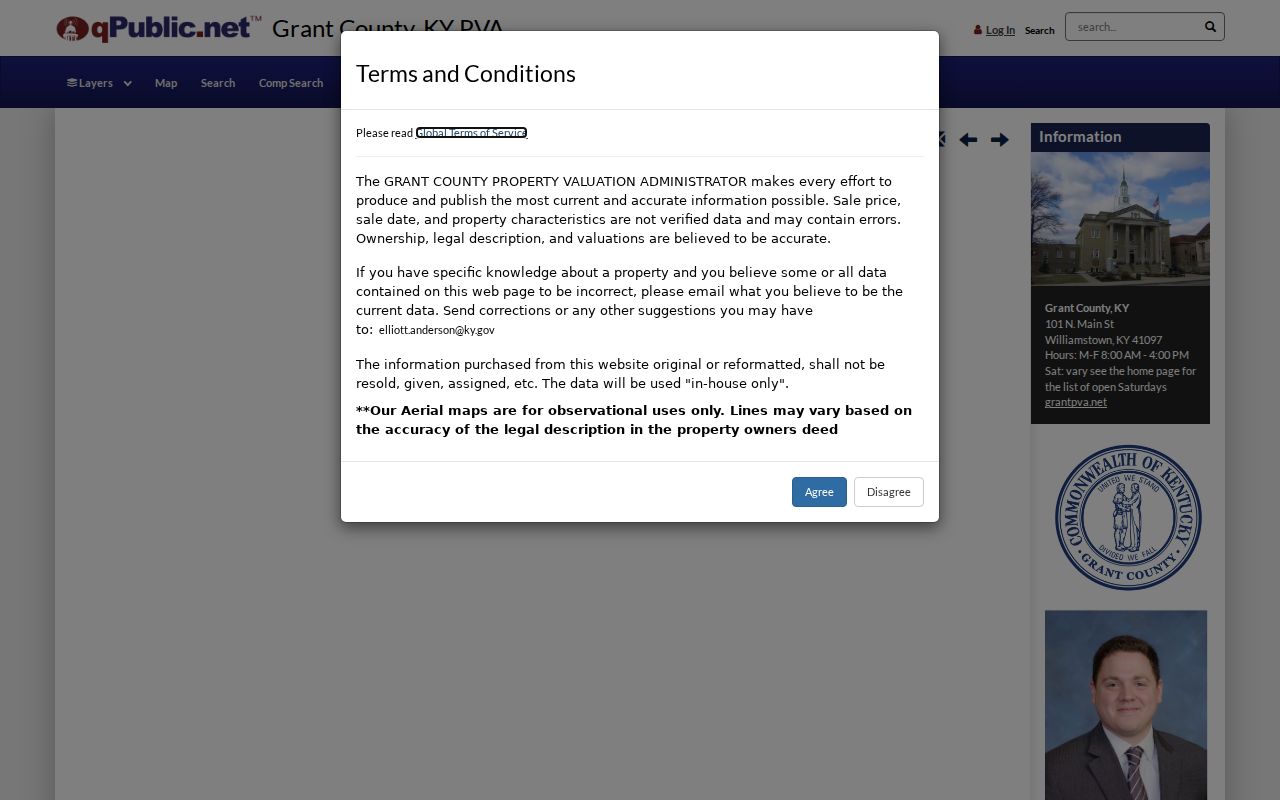
The screen identifies the correct Grant County application surface. A live parcel lookup must still supply the labels, amounts, and roll date behind any assessed value.
Set Limits on a Grant County Property Value
A PVA value exists for one purpose: tax administration across many parcels at once. It is not an appraisal. Grant County buyers, lenders, insurers, and courts often need facts the tax roll never captures. A deed records one sale, nothing more. When a parcel-specific professional opinion matters, a licensed appraisal is the right source.
Value versus price. A Grant County assessed value serves taxation and is not a promise of a sale price. It is not a private appraisal.
Always state the label, date, parcel number, and source behind any figure. Without all four, treat it as an unverified lead rather than a dependable property value.