
What Grant County Deed Records Can Document
A deed names the parties and spells out a conveyance presented for recording in Grant County. The legal effect turns on the instrument's own language and the surrounding title facts. So start by pinning down the deed type rather than treating every transfer the same.
| Deed Type | What It Does | Common Use |
|---|---|---|
| Warranty deed | Conveys an interest with warranties stated in the instrument | Ordinary sale and source-of-title review |
| Quitclaim deed | Conveys whatever interest the grantor may hold | Interest release or chain correction |
| Special warranty deed | Uses warranties limited by the deed's wording | Transactions requiring closer covenant review |
| Trustee or executor deed | Reflects authority stated for a fiduciary transfer | Trust or estate chain link |
| Sheriff or tax deed | Records a transfer from a statutory or court process | Distressed-property history |
Read the full image. It shows the recording date, the parties, the legal description, any reservations or exceptions, and the source-of-title citation. A mortgage or lien can burden land without conveying it, and an index row is only the route to the instrument itself.
Grant County eCCLIX and the 1986 Image Cutover
The Grant County Clerk records page routes land-record searching to eCCLIX. Deed images run from June 1986 forward. Mortgage images begin in September 1986. Earlier material survives through Clerk assistance, books, microfilm, and archives. An index citation still matters even when no image sits online.
Personal Grant County access is free after public sign-up. It is capped at five searches per day. Commercial users need a subscription. The eCCLIX access page shows the login, Remember Me, public-account, subscription, and help controls visitors will use.
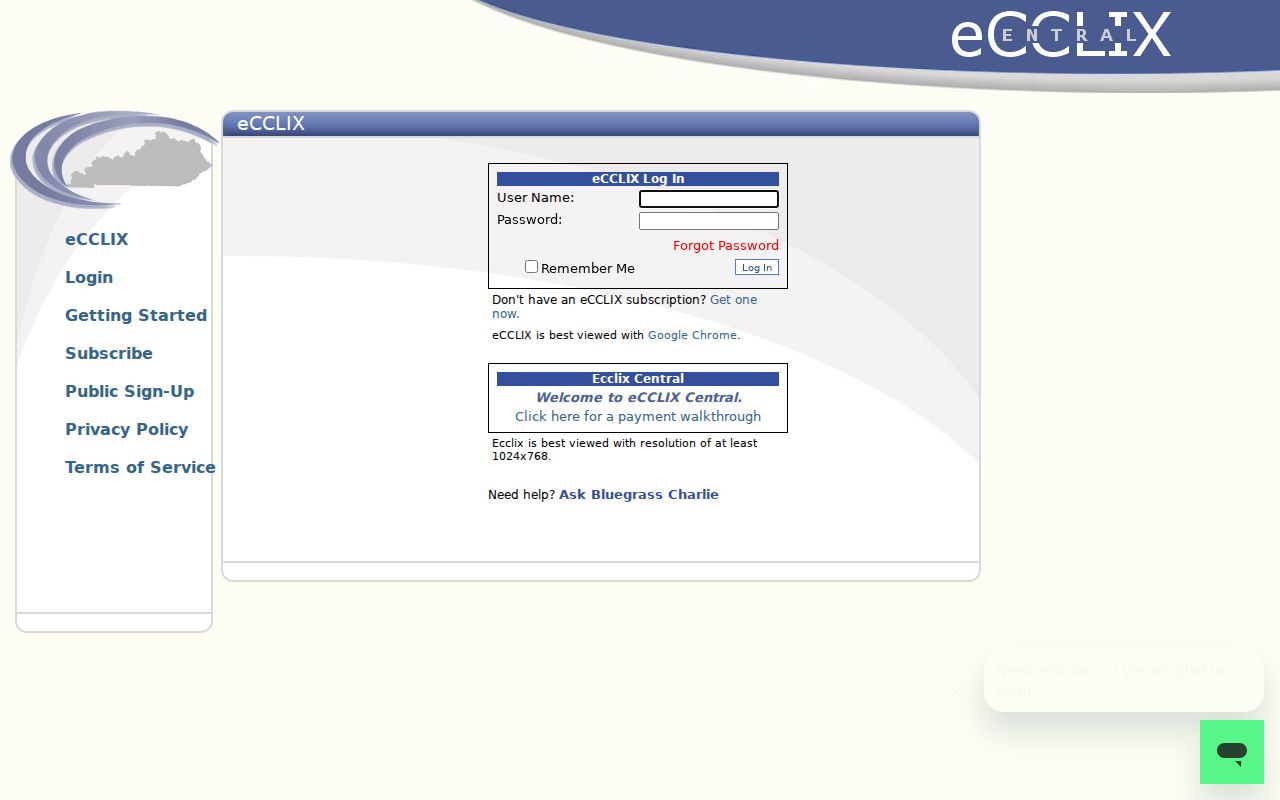
Treat the online cutoff as a routing rule. It is not the start of Grant County land history. Five daily searches go fast. Prepare exact names, dates, and known citations before spending the allowance. The gateway itself is only the door to the deed records, not a result.
An index citation for a pre-1986 instrument can still identify a deed book and page. No image may be attached. Hand the Clerk that citation plus the party names. Add the approximate recording date, a subdivision or acreage clue, and any source-of-title reference. If the trail leads into archive material, record the repository and series alongside the citation. The property search stays reproducible that way.
Follow Grant County's Grantor-Grantee Chain
Forward indexes file the conveying party under grantor. Reverse indexes file the receiving party under grantee. Match the land, not just the name. One person can convey several tracts in Grant County property records.
Record every name exactly as printed. Include initials, spouse names, trust or estate wording, and entity suffixes. A later search can widen a spelling. But the original form is evidence of how the clerk indexed the instrument. Dates need care as well. The recording date differs from the execution and acknowledgment dates. So label each one separately whenever the deed shows more than one.
- Use the PVA result or latest deed to identify the current grantee and property description.
- Record that deed's grantor, date, type, citation, and source-of-title clause.
- Search the grantor as an earlier grantee within a sensible date range.
- Compare lot, block, acreage, adjoining calls, and reservations before accepting the link.
- Repeat until the online cutoff, then continue in deed books or microfilm.
- Grantor
- The party conveying the stated interest.
- Grantee
- The party receiving that interest.
- Chain of title
- The connected sequence of transfers affecting the same land.
- Book/page or instrument number
- The recorder's retrieval citation.
Record the Live Grant Deed Index Fields
The public gateway shows its index fields only on a live result. Preserve the labels exactly as displayed. Invent no local format for a Grant County deed record that has not been retrieved.
| Parties | Grantor and grantee exactly as indexed, including initials and entity suffixes. |
|---|---|
| Document type | The indexed category, checked against the image. |
| Recording data | Date and book/page or instrument reference. |
| Property clue | Subdivision, lot, acreage, or description excerpt if supplied. |
| Image status | Whether the instrument opens online or needs a Clerk request. |
Chains often require hunting variant forms. Search married-name forms, initials, estates, trustees, and full entity names when the deed records demand them. Kentucky's Business Entity Search can confirm an LLC's formal styling, but the deed itself remains the authoritative property-transfer source in Grant County.
Grant County Deed Books, Archives, and Parent County
Grant County was created from Pendleton County on February 12, 1820, so a source-of-title citation dated earlier points into Pendleton records rather than a gap. The KDLA land-record inventory lists Grant deeds on microfilm from 1820 through 2010. The FamilySearch catalog describes deed books for 1825 through 1910, grant books for 1854 through 1929 and 1967, and indexes spanning 1825 to 1968.
A finding aid maps coverage; it is not the record. Cite the underlying deed book and page, never the catalog alone. A pre-1820 reference belongs to the parent-county trail. It should not be dismissed as a missing Grant County record.
The archive date runs are not interchangeable. KDLA places Grant deed records beginning in 1820. The FamilySearch catalog describes deed books starting in 1825. That gap is a reason to name the specific series and repository consulted. It is not a basis to claim 1820 through 1824 deeds are absent. In any property search, distinguish an index entry from an image, a transcription, and a certified copy.
Local Book-and-Page Clues Test the Land Match
Book-and-page citations sometimes settle what an address cannot. Claiborne Estates, for instance, records its restrictions at Deed Book 255 page 13, with supplements in Book 266 pages 380 and 433 and Book 291 page 171. Dry Ridge offers an even sharper example. King Addition lots 2 through 5 trace to Plat Book 1 page 62. A 31 N Main record cites A.E. Carter lot 3, Ben Vallandingham's plat filed February 24, 1920, and Deed Book 39 page 28. You can check these citations against the restriction and plat tabs attached to each parcel in qPublic.
A lot number, a plat, and a recorded citation carry real weight when a modern street address is ambiguous. Treat them as starting points only. They do not identify the present owner of record. Match the later deeds and the current parcel before drawing any conclusion about today's land.
Follow every citation to its source. That means retrieving the actual restriction, easement, exception, reservation, or prior instrument rather than paraphrasing the citation found in a later deed. A modern parcel outline can suggest the likely tract. Only the recorded page holds the operative language, though. Keep the subdivision phase and lot number as separate fields, because a repeated street name or matching acreage can point at the wrong tract on its own.
Grant County was formed in 1820, and chains sometimes cross that line. When they do, state the jurisdiction change explicitly. The last Pendleton County instrument should connect to the first Grant County instrument through the land description and the parties, not through a shared surname alone.
Monitor New Grant Deed and Mortgage Filings
The Clerk offers a free Grant County DOC ALERT. It watches for new deed and mortgage filings. Enrollment takes only a person or business name plus an email. Matching filings then trigger a notice. An alert is a prompt, not proof. It does not confirm that an instrument is valid. Nor does it confirm that the instrument touches the parcel you expect.
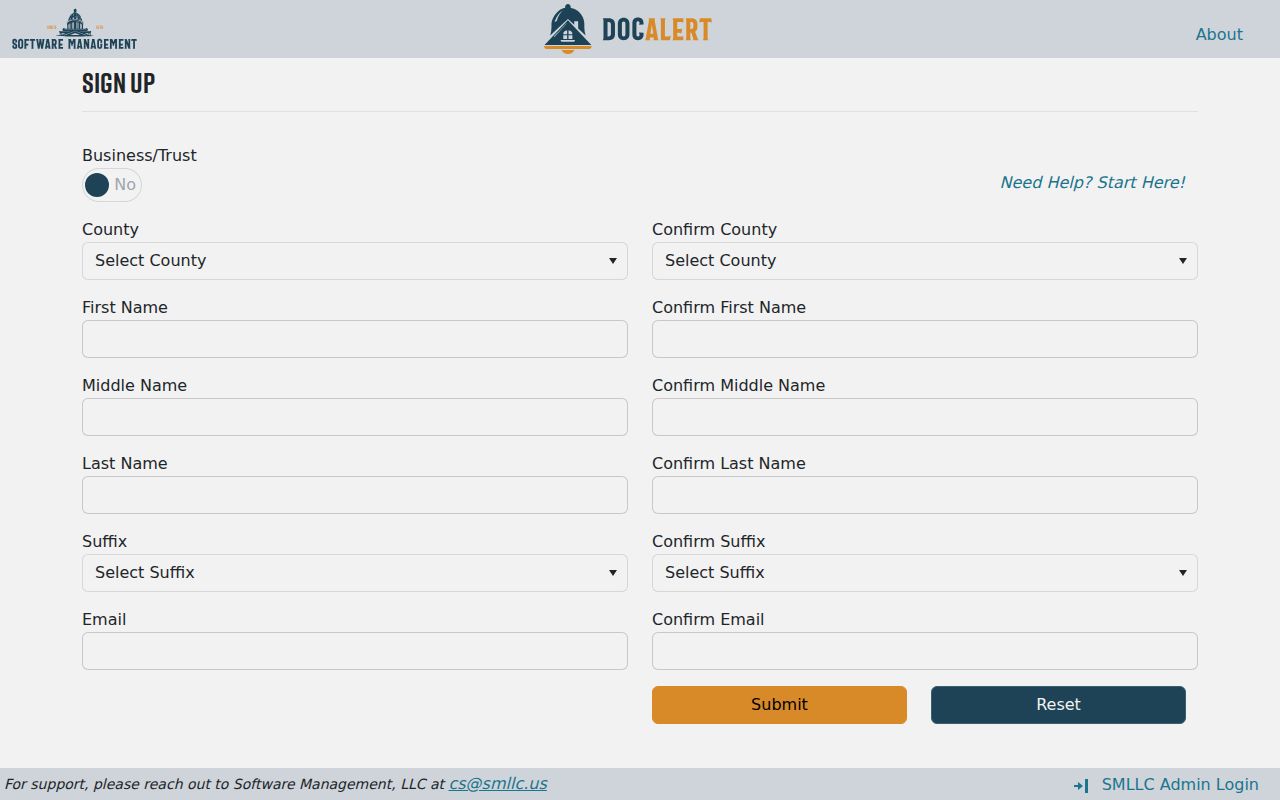
When a notice arrives, pull the instrument itself and check its parties, execution, recording details, and legal description.
Obtain a Grant County Deed Copy
Start with the eCCLIX image attached to the index citation. Need a pre-cutover deed, an unavailable image, or a certified copy? Contact the Grant County Clerk at 107 N. Main Street, Williamstown, Kentucky 41097, or 859-824-3321. Give the parties and an approximate date. Add the document type. Include either the book and page or the instrument number. No Grant-specific copy charge is published. So ask the Clerk about the current fee and the preferred request method.
For archival records, the KDLA request service handles requests online or by mail. Its published terms list a nonrefundable search fee of $20 in-state or $25 out-of-state. Copy or scan charges and tax apply on top of that. Processing runs about four to six weeks. Ask for a defined series and range rather than a whole property history.
Recorded, not guaranteed. Grant County deed records show what reached the recorder. An index or copy is not a title opinion and may not reveal unrecorded interests or settle conflicting claims.
Connect Court and Estate Transfers to the Deed
A Grant County chain of title does not always move by simple sale. Estates, commissioner sales, quiet-title judgments, foreclosures, and delinquent-tax proceedings can all transfer real property. In each case, the conveyance still arrives through the recorded deed. Read the deed's recitals and party names closely. They usually reveal which underlying matter produced the conveyance. Kentucky guidance is clear on custody. The clerk of the court that heard the case keeps the actual file. The Administrative Office of the Courts does not. CourtNet and the Kentucky Judicial Indexes can supply leads. Even so, the Grant court clerk remains custodian of the local case record.
Record the deed citation and the connected case or probate reference side by side. That pairing preserves the authority behind a fiduciary or court-directed transfer. It also prevents an unexplained leap between names in the chain.
Need the actual case file? The Kentucky court-record request guidance identifies the custodian. It also lays out the route for older records. A docket result may confirm a case number and party spelling. The pleadings, judgment, order of sale, and commissioner's report often matter more, though. They explain how the interest reached the recorded deed. In probate matters, confirm that a will, an appointment, or a court order supplied the executor's authority.
Tax-sale work demands the same discipline. The Grant County Clerk keeps the delinquent tax-bill sale records. Each step in the process is a separate document, though. The trail runs from the delinquent bill to the certificate. It may include any assignment, the redemption record, and the eventual deed. Request the record for the specific year. Match it to the same parcel description before inserting it into the chain. This habit keeps a process record from being mistaken for a completed conveyance.
Maintain a citation log for every search. Note the system, the query spelling, the result reference, and any unresolved question. A documented chain is reproducible, and it spares your limited personal eCCLIX searches.